
Mock API - Create and Simulate APIs for Testing - Mocki
Create, run and deploy mock APIs in minutes. Use your mock API to run tests independent of external services, design APIs and remove backend dependencies for your frontend team.
Categories:
Mocki.io is a platform for creating and simulating mock APIs to enable independent testing and development without backend dependencies.
🚀 Overview
Mocki is a powerful API mocking tool that allows developers to create fully functional mock APIs quickly. It supports simulating real-world scenarios like errors, delays, and dynamic responses, making it ideal for frontend and backend development, integration testing, and microservices architectures.
What problem does this project solve? It eliminates dependencies on external services or unfinished backends, enabling isolated testing, faster development cycles, and coverage of edge cases like failures and latency.
Who is it built for? Backend developers, frontend teams, architects, and CTOs working on applications that rely on HTTP APIs, especially in microservices environments.
Why did you build it? To accelerate development by allowing parallel work on frontend/backend, improve test reliability with realistic mocks, and provide both cloud-hosted and local options via CLI.
✨ Key Features
- Isolated mock APIs for dependency-free testing (simulates services without real backends)
- Test data generator with fake data (!Fake tags for realistic JSON like names, emails)
- Error simulation, delays, random failures, and conditional responses based on headers/query/params
- Configuration as code using YAML with GitHub sync for version control
- Open Source CLI for local/offline running (npm install -g mocki)
- Web dashboard for monitoring usage, quick setup, and managed hosting
- Dynamic behaviors: random responses, branching filters
🛠 Tech Stack
- Frontend: Web interface (modern JS framework, details not specified)
- Backend: Cloud service for hosting mocks
- CLI: Node.js
- Database: N/A (static/config-based)
- Auth: Account-based sign-up
- Hosting: Mocki cloud platform
👥 Who Is This For?
This project is useful for:
- Developers who want to prototype and test APIs independently
- Teams looking for robust microservice testing and CI/CD integration
- Indie makers building apps needing quick mock endpoints
📸 Screenshots / Demo
- Live demo: https://mocki.io
- GitHub: https://github.com/adalyte/mocki
🔥 Project Status
- 🟢 Actively building
Last updated: 2026-03-24
❓ FAQ
Is this project free?
Freemium (7-day free trial; Starter plan $15/month with 1000 requests/day, monitoring, support)
Is the source code available?
Yes — https://github.com/adalyte/mocki (Open Source CLI)
Can I contribute?
Yes, contribute via GitHub: report issues, submit PRs to the CLI repository.
📬 Contact & Links
- Website: https://mocki.io
- GitHub: https://github.com/adalyte/mocki
- Twitter/X: N/A
- Email: N/A (sign up via website)
Built with ❤️ and kept warm on WarmIndex.
Similar apps

Sunsetting Atom - The GitHub Blog
atom.io
We are archiving Atom and all projects under the Atom organization for an official sunset on December 15, 2022.
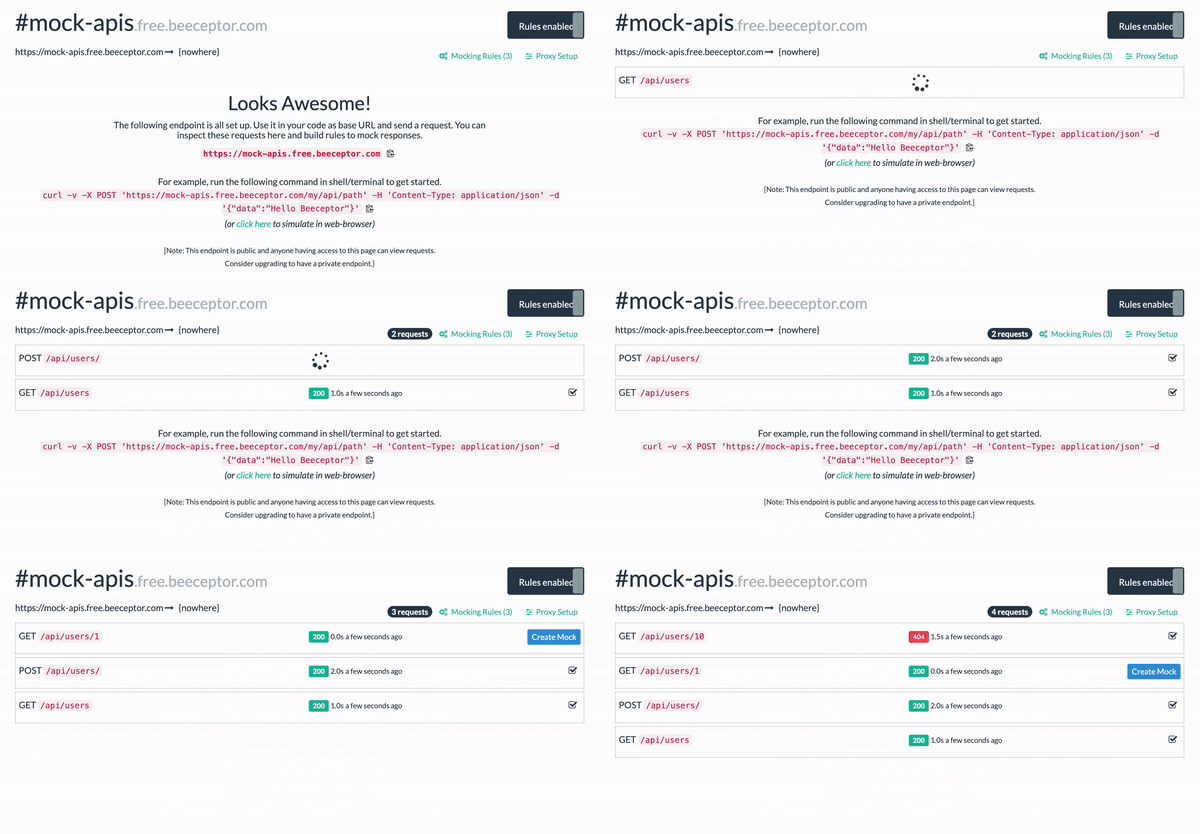

Mock APIs - Free REST & SOAP APIs for Devs & QA
beeceptor.com
Build mock APIs in a few seconds. No coding required. Build replicas for REST, SOAP, gRPC, GraphQL APIs for testing. The #1 alternative to WireMock. Get started free.

MailTrap
mailtrap.io
Modern Email Delivery Platform for developer & product teams. Fast delivery. High inboxing rates. 24/7 expert support. Email API/SMTP for reliable email sending
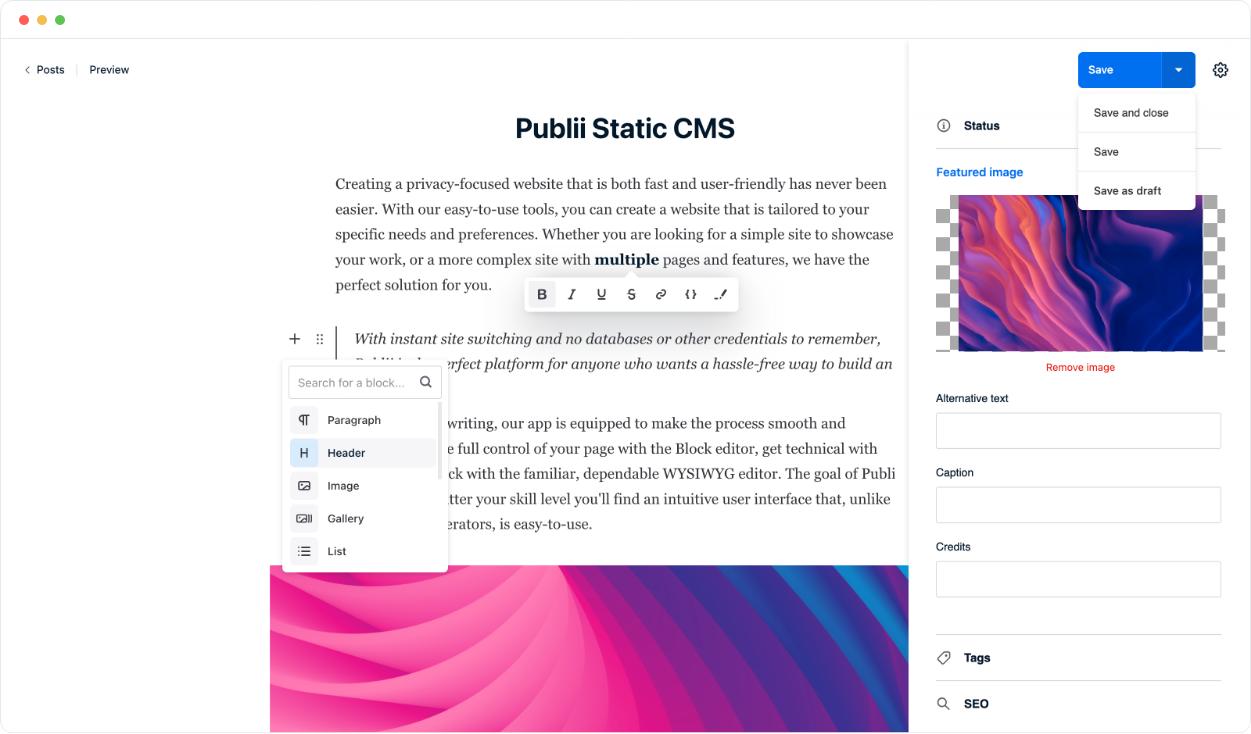

Open-Source Static CMS for Fast, Secure, GDPR & CCPA-Compliant Websites
getpublii.com
Free, open-source desktop CMS for creating fast, secure static websites. Works offline, WordPress-like simplicity, one-click deployment. GDPR & CCPA compliant.